There Is No Substitute for Training
What the Alps, Mallorca, and a few decades of endurance sport taught me about getting better
I think back sometimes to some of the training adventures I had when I was younger.
Not because everything we did was smart.
It wasn’t.
Not even close.
But man, we had some great times.
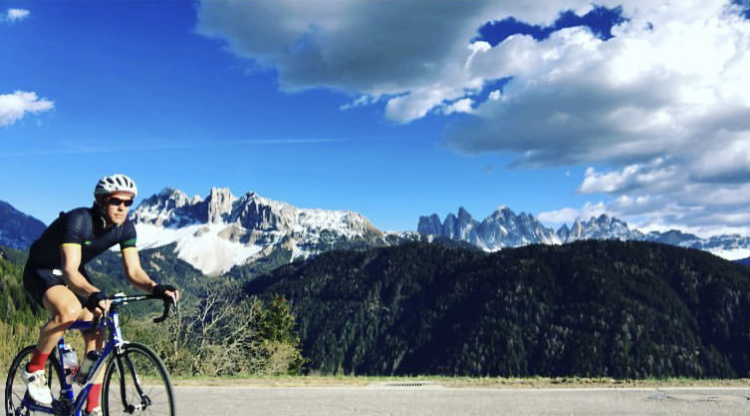
One of my favorite memories was a multi-day bike trip through the Swiss Alps with two of my best friends. We were teenagers, had our bikes, camping gear, not much money, and probably more enthusiasm than common sense.
We camped on the side of a mountain pass. At some point, we needed hot water, so we started knocking on doors, asking complete strangers if they could help us out.
Then came the rain.
Not a little rain.
We got absolutely trenched on one of the mountain passes. We were cold, soaked and miserable, and eventually decided to sacrifice some of our precious budget and get a hotel room.
The three of us ended up sitting together in a hot bath, trying to get warm.
Three teenage guys.
One bathtub.
Pretty sure we weren’t thinking about recovery protocols.
We just wanted to stop freezing.
And then, somewhere on the way toward our final passage, one of my friend’s pedals broke. We were miles from the next village, running low on food, and staring at a long, cruel climb ahead of us.
What were we going to do?
Well…
You fix what you can.
You keep going.
You figure it out.
There wasn’t an app telling us what to do. There wasn’t a recovery score telling us whether we were ready to continue. There wasn’t a nutrition calculator telling us exactly how many grams of carbohydrate we should consume per hour.
We just had to deal with whatever was in front of us.
And somehow, we loved it.
Mallorca
A few years later, I travelled to Mallorca with three other friends. They were all free climbers, and one of them would sadly die years later in a climbing accident.
We stayed for three weeks.
I gave myself a simple goal:
Ride at least 100 kilometers every day.
And I did.
There were other trips to Mallorca, too. I went there roughly ten times over the years.
The objective was pretty simple:
Train the house down. Eat. Sleep. Train.
That was basically the motto.
Was it always smart?
Probably not.
Did we sometimes train too hard?
Absolutely.
Would I prescribe everything we did back then to an athlete today?
Definitely not.
But it was one hell of a great time.
We loved it.
It was rad.
And something happened during those years that I think is easy to forget in today’s endurance world:
We trained.
A lot of learning happened simply because we were doing the thing over and over again.
We noticed things.
We experimented.
We made mistakes.
We pushed too hard.
Sometimes we probably didn’t push hard enough.
And then we got back on the bike the next day.
Before everything was measured
Today, we have an incredible amount of information available to us.
We can measure power, heart rate, lactate, VO₂max, training load, recovery, sleep, HRV, running dynamics, cadence, ground contact time, glucose and just about everything else.
And I love it.
I use a lot of this technology in my coaching today.
Lactate testing, power data, TrainingPeaks, heart rate, performance testing — all of these things can be incredibly useful.
But I sometimes wonder if we have reached a point where some athletes are trying to optimize everything except the actual training.
You see athletes buying the most expensive bike.
The best wheels.
A smart trainer.
A treadmill.
Recovery boots.
An ice bath.
A sauna.
Supplements.
Recovery drinks.
A VO₂ mask.
Another device.
Another app.
Another subscription.
Another gadget telling them how they slept last night.
And then they train eight hours a week.
Maybe ten.
And sometimes I think:
What if you just trained?
Not in a reckless way.
Not by doing more just for the sake of doing more.
But consistently.
Purposefully.
For months.
For years.
That is still where the magic happens.
I saw some of this technology very early
I actually had the opportunity to use one of the early prototypes of what would eventually become the SRM power meter.
An engineer — I believe his name was Schopenhauer, a Bavarian engineer — came to one of our training weekends and introduced it to us.
This was in the early ’90s.
I used it a few times.
And honestly?
I didn’t really know what to do with it.
Power was still a pretty foreign concept to most of us.
I continued to train by feel and then increasingly with heart rate.
Looking back, it is kind of funny.
Today we can build incredibly sophisticated training models around power data.
Back then, I basically thought:
Okay… that’s interesting.
And then I went riding.
Which brings me to another strange experiment.
I once used a bike developed around the East German training system. It had a chainring on either side of the bike, two chains and one gear.
Fixed gear.
Man.
It was brutally hard.
The first time I rode it, my heart rate shot through the roof.
The challenge was to pedal as symmetrically and smoothly as possible. There was nowhere to hide. You couldn’t simply mash one side of the pedal stroke and let the other side come along for the ride.
Eventually, I got the hang of it.
And when I got back on my regular bike, it felt amazing.
Smooth.
Round.
Easy.
I felt like I was flying.
Maybe I was 1–2 mph faster.
Was that a scientifically controlled experiment?
No.
Did I have a lab report proving what had happened?
Nope.
But I felt the difference.
And I remembered it.
Experience teaches you things
That’s one thing I don’t want us to lose in this incredibly data-driven sport.
Experience matters.
Not instead of science.
Alongside it.
There were times when I trained way too hard. Especially on climbs and hard rides.
Looking back, I wish I had held back more often.
I would have recovered better.
I probably would have absorbed more of the training.
I might have raced better.
But did those experiences hurt my development?
I don’t think so.
Actually, I think some of them helped me tremendously.
I learned what deep fatigue felt like.
I learned what it felt like to push beyond what I thought was possible.
I learned what happened when I didn’t recover.
I learned that sometimes you feel terrible and then suddenly come around.
I learned that sometimes you feel fantastic and should probably still back off.
And I learned that your body is giving you information all the time.
You just have to pay attention.
The problem isn’t technology
Let me be clear.
I’m not against technology.
Quite the opposite.
Modern training science is incredible.
We can do things today that I could only dream about when I was younger.
We can identify physiological thresholds.
We can measure lactate.
We can analyze power.
We can understand metabolic efficiency.
We can individualize training far better.
We can control training load and recovery much more intelligently.
And that’s fantastic.
If you’re training 20–30 hours a week, racing professionally, or trying to squeeze the final one percent out of your performance, those details can matter enormously.
But for someone training eight, ten or twelve hours a week?
I’m not convinced that another gadget is always the answer.
Maybe the answer is to train consistently for another six months.
Maybe the answer is to stop skipping the easy sessions.
Maybe it’s to stop turning every workout into a race.
Maybe it’s to get more sleep.
Maybe it’s to simply follow a plan long enough to see what happens.
Train first. Optimize later.
We used instinct, too
One thing we had back then that I think athletes sometimes lose today was instinct.
We trained by feel.
We noticed how we felt.
We knew when something was off.
We didn’t always get it right, of course.
But we were involved in the process.
Today, an athlete can sometimes become so dependent on numbers that they stop listening to themselves.
Garmin says one thing.
TrainingPeaks says another.
Strava says another.
Their recovery score says they should rest.
Their watch says they slept badly.
Their power meter says the workout was supposed to be easy.
And meanwhile, they feel great.
Or they feel terrible.
Which one do you believe?
I think the answer is:
All of it is information. None of it is the athlete.
The skill is learning how to put everything together.
That’s part of becoming a better athlete.
Who are you actually training for?
There is another thing I find interesting about today’s endurance world.
Strava.
Social media.
The constant sharing.
Your workout.
Your pace.
Your power.
Your intervals.
Your long run.
Your easy run.
Your recovery ride.
Your new bike.
Your new wheels.
Your new shoes.
Your new PR.
Don’t get me wrong. I enjoy seeing what people are doing.
But I remember deliberately keeping my training fairly secret.
Why would I want my competition to know what I was doing?
Today, we often broadcast our training to everyone.
And sometimes I wonder:
Who are you actually training for?
Are you training for yourself?
Or are you training for the thumbs-up?
Do you need someone to tell you that your easy jog was a good workout?
Do you need to prove that your long ride was longer than someone else’s?
Do you need to compare your training week to an elite athlete’s?
Maybe.
We’re human.
Of course we like recognition.
But ultimately, it’s you.
You vs. you.
Not you versus somebody else’s Strava feed.
This doesn’t mean I want to put limits on athletes
And I don’t want this article to be misunderstood.
I’m not telling you to train less.
I’m not telling you to train more.
I’m not telling you to ignore science.
I’m not telling you to throw away your power meter.
I’m certainly not telling you that lactate testing doesn’t matter.
It does.
I’m telling you to stay open-minded.
Use the tools.
But don’t become dependent on them.
Train because you want to discover what you’re capable of.
Don’t train a certain way simply because a textbook says so.
Don’t train a certain way because a professional team does.
Don’t buy something because an influencer tells you it’s the missing piece.
Don’t assume that the newest technology automatically makes you a better athlete.
Everything has a place.
Everything has a time.
The question is whether you actually need it.
There is no substitute
I’ve been doing this for a long time now.
I’ve seen enormous changes in endurance sport.
The bikes are better.
The wheels are better.
The shoes are better.
The training science is better.
The nutrition is better.
The testing is better.
The data is better.
And that’s all great.
But the fundamental thing hasn’t changed.
You still have to train.
You have to show up.
You have to repeat the work.
You have to recover.
You have to be patient.
You have to learn.
You have to make mistakes.
You have to occasionally get uncomfortable.
And you have to remain curious.
That’s probably the biggest lesson those early trips through the Alps and all those Mallorca training camps gave me.
We didn’t know everything.
We didn’t have all the answers.
We weren’t optimizing every variable.
But we were curious.
We were adventurous.
We wanted to see what we could do.
And we trained.
Maybe that’s why I still love this sport after all these years.
Because underneath all the technology, all the data, all the equipment and all the science, there is still something incredibly simple about it.
You get on your bike.
You put one foot in front of the other.
You get in the water.
And you see what happens.
There is no substitute for training.
Everything else can help.
But that’s where it starts.
And maybe, sometimes, that’s where we should start again.
Train. Learn. Adapt. Repeat.
Transition to the next level.