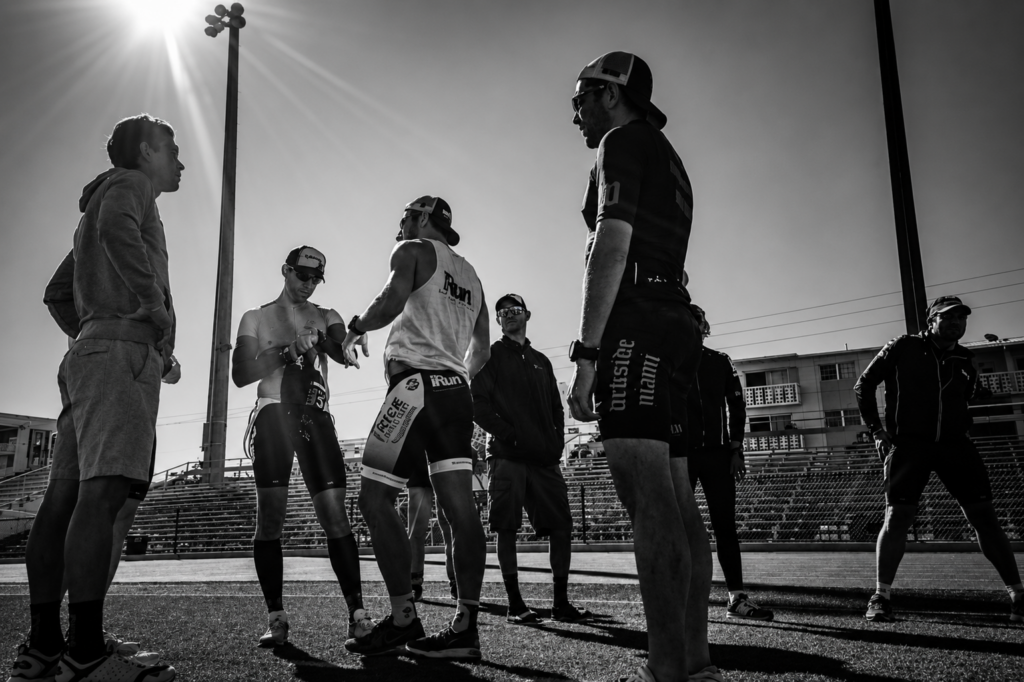
The Skill of Execution
Performance is never static.
Fitness changes throughout a season. It changes across years and, eventually, across a lifetime.
A young athlete may not yet have the physical development to compete with mature athletes. Their aerobic system, strength, and training history are still developing. And yet their attention may be extraordinary. Their curiosity may be as high as it will ever be. Their trust in a parent, teacher, or coach can be almost absolute.
They listen.
They try.
They fall.
They try again.
There is often very little noise between the instruction and the action.
As athletes mature, physical capability increases. Years of consistent training build fitness. Experience develops. Knowledge accumulates.
But performance does not always become more consistent.
Sometimes the opposite happens.
We know more. We expect more. Other people expect more.
And the noise begins.
Fitness Is Only Part of Performance
An athlete can be extraordinarily fit and still perform below their capability.
I have seen this throughout my career as an athlete and coach.
The physical preparation is there. The training has been completed. The numbers suggest the athlete is ready.
But race day introduces something training data cannot completely measure.
Expectation.
Pressure.
Fear of disappointment.
A talented athlete begins hearing:
You should win.
You’re the favorite.
You should qualify.
You should run this time.
At first, those words may sound like confidence.
But they can become weight.
The athlete is no longer simply swimming, riding, or running.
They are thinking about sponsors. Teammates. Training partners. Family. The coach. The result sheet.
They begin racing the outcome before they have finished the process.
I can’t win.
I’m too far behind.
I’m not going to hit my goal time.
The race is gone.
And something changes.
Execution drops.
Perhaps only ten percent.
But ten percent is enormous.
The athlete may still finish. They may still produce a respectable result.
But they stopped delivering the performance they were capable of producing that day.
The Outcome Is Inevitable. The Process Is Available.
Every race will eventually have an outcome.
There will be a finishing time.
A placing.
A winner.
Someone will qualify and someone will not.
We cannot remove the outcome.
But focusing on it too early creates a problem.
The outcome is something that will happen later.
Execution is something we can influence now.
What is my effort?
What is my breathing telling me?
How am I moving?
What has changed?
Do I need to respond?
Do I need patience?
Do I need courage?
Can I give a little more?
This is attention.
And attention brings the athlete back to the performance that is actually taking place rather than the performance they are imagining, fearing, or hoping for.
Execution Begins at Home
Race-day execution does not suddenly appear because we put on a race suit.
We practice it every day.
We practice it when nobody is watching.
How do you approach an easy session?
Do you understand its purpose, or do you turn it into something else because going faster makes you feel better?
When a session becomes uncomfortable, do you immediately negotiate with yourself?
When training does not go perfectly, do you remain engaged or mentally abandon the session?
Do you arrive prepared?
Do you constantly postpone?
Do you look for ways to execute a little better than before?
This does not mean every workout must be perfect.
It certainly does not mean ignoring fatigue, pain, illness, or meaningful feedback from the body.
That is not discipline.
That is often poor decision-making disguised as toughness.
Execution means understanding the purpose of what we are doing and attempting to deliver it with attention.
Sometimes the correct execution is pushing harder.
Sometimes it is holding back.
Sometimes it is stopping.
The skill is learning the difference.
High Standards Exist When Nobody Is Watching
I believe athletes develop their standards where they train.
At home.
On the quiet roads.
In the pool early in the morning.
During the run nobody will ever see except as a file uploaded to TrainingPeaks.
If we constantly do whatever we feel like doing, arrive late, postpone sessions, change the purpose of workouts, or repeatedly accept an effort below what we know we can give, we are practicing a form of execution.
We are simply practicing the wrong one.
Eventually, habits become automatic.
This is why I believe striving for high standards matters.
Not perfection.
Standards.
There is a difference.
Perfection is fragile. One mistake can destroy it.
Standards give us something to return to.
We hold ourselves accountable because repeated execution becomes behavior, and behavior eventually becomes part of who we are as an athlete.
On race day, under pressure, we rarely become a completely different person.
We tend to return to what we have practiced.
Execution Gives Us Evidence
Athletes often ask themselves a simple question:
Can I do it?
Training helps us answer that question.
Not through positive thinking alone.
Through evidence.
You complete the session.
You hold the effort.
You recover.
You return.
You do it again.
Perhaps one day you enter what I sometimes call the hurt box—the place where the effort becomes genuinely uncomfortable and continuing requires a decision.
You stay.
Not recklessly. Not every day.
But when the purpose of the session requires it, you learn to remain present in discomfort.
And something important happens.
You now have evidence.
I have been here before.
I didn’t fall apart.
I can tolerate this.
I know what this feels like.
Execution delivers an answer to the question:
Can I do it?
This is why confidence cannot simply be given to an athlete.
We can encourage someone. We can believe in them. A coach can see potential long before the athlete sees it.
But eventually, the athlete needs evidence of their own.
Faith creates action.
Action creates evidence.
Evidence builds confidence.
And over time, confidence becomes trust.
But the Question Keeps Changing
There is a difficult part of athletic development that we don’t discuss enough.
Just when you have answered one question, another appears.
Perhaps winning used to feel easy.
Then someone faster arrives.
Now you have to fight.
Perhaps you were always the strongest swimmer in your group.
Suddenly, you cannot hold the same splits.
Perhaps you once ran a certain pace and now, as a masters athlete, those numbers are becoming harder to reach.
Perhaps your career becomes more demanding.
You have children.
You experience injury.
You become a professional athlete and suddenly the sport that was once your passion is also how you pay your bills.
The question changes.
Can I finish?
becomes
Can I compete?
Then:
Can I win?
And perhaps later:
Can I accept that I am no longer the athlete I was—and discover what I can become now?
Every phase requires new execution.
The danger is becoming trapped by an old identity.
I was the best.
I used to swim those splits.
I used to run that pace.
This used to be easy.
When reality no longer matches identity, self-doubt can create havoc.
But the athlete still has a choice.
Not a choice about the past.
A choice about what happens next.
How Much Do You Want It?
There are moments when we need to ask difficult questions.
How important is this goal to me?
What am I willing to invest?
What am I willing to change?
And yes—how much discomfort am I willing to tolerate?
I don’t believe in the simplistic no pain, no gain mentality.
More suffering does not automatically create more performance.
Ignoring every signal from the body is not strength.
Recovery matters. Health matters. Sustainable training matters.
But we should not move so far away from discomfort that we pretend meaningful development is always comfortable.
Sometimes growth requires us to enter the red zone.
Sometimes we need to hurt.
Sometimes we need to discover what happens when the easy answer is to stop and we choose to continue.
This is not punishment.
It is learning.
Performance Changes. Execution Remains a Skill.
Not every athlete needs to win.
Not every athlete wants to.
For one person, performance may mean becoming a professional athlete.
For another, it may mean qualifying for Kona.
For someone else, completing an Ironman may be a celebration of health, fitness, and what their body is capable of doing.
Those goals are different.
The required fitness is different.
The outcome is different.
But the skill of execution still matters.
Can you apply what you have?
Can you remain attentive?
Can you respond to what is happening rather than what you hoped would happen?
Can you continue when discomfort arrives?
Can you adjust when the original plan no longer fits reality?
Can you trust the work you have done?
This is where the T3 Performance Equation comes alive:
Fitness × Attention × Trust
Fitness creates capability.
Attention creates awareness.
Trust allows us to act without being consumed by doubt.
But execution is where these qualities are expressed.
It is where we learn.
It is where we collect evidence.
It is where doubt begins to be replaced by proof.
The journey will always contain uncertainty. Winds change. Life changes. Bodies change. Goals change.
We cannot control all of it.
But we can continue to work on our bodies. We can pay attention. We can protect and develop the relationships with coaches, family, friends, and the people who help us stay grounded.
And we can practice execution.
Again.
And again.
Until high standards become habits.
Until evidence becomes confidence.
Until confidence becomes trust.
And when the next question arrives—
Can I do this?
—we are willing to move forward and find out.